Communication access
How to use a choice board for learning questions
Offer a small set of available, understandable choices and treat pointing, eye gaze, reaching or symbol selection as meaningful communication.
Published

Keep the learner’s existing communication system central
A choice board displays two or more options using objects, photographs, symbols or written words. It can help a learner express a preference, answer a bounded question or request the next action without relying on speech.
If the child already uses AAC, signs, eye gaze or a communication book, follow the system and advice agreed with the family, school and speech and language therapist. A home-made board should not replace specialist assessment or remove access to a richer vocabulary.
The opening image is an AI-generated editorial illustration with fictional Indonesian people. It does not show a real child, tutor, AAC assessment or therapy session.
Choose one honest communication purpose
Start with a question that genuinely allows choice. “Which example should we solve first?” can offer two visible problems. “Do you want to finish?” is not an honest choice if stopping is unavailable.
For academic questions, decide whether the board is testing knowledge or merely supporting communication. If the learning goal is to identify a habitat, the choices might show desert, rainforest and ocean. If the goal is to explain a food chain, a three-picture board may be too narrow and a fuller communication system is needed.
Build the first board with two or three clear options
Use representations the learner already understands. Real objects may be clearer than photographs; photographs may be clearer than abstract symbols. Keep the layout stable, remove unavailable choices and include a way to communicate “none”, “different”, “help” or “finished” when appropriate.
| Design decision | Useful starting point | Avoid |
|---|---|---|
| Number of options | Two or three clearly different choices | A crowded page of unfamiliar symbols |
| Representation | Objects, photos or symbols already meaningful to the learner | Changing symbol style in every lesson |
| Question language | One short question followed by quiet wait time | Repeating, rephrasing and pointing to the preferred answer |
| Response | Accept the learner’s established selection method | Requiring speech after a clear non-speaking response |
Model once, then wait without testing
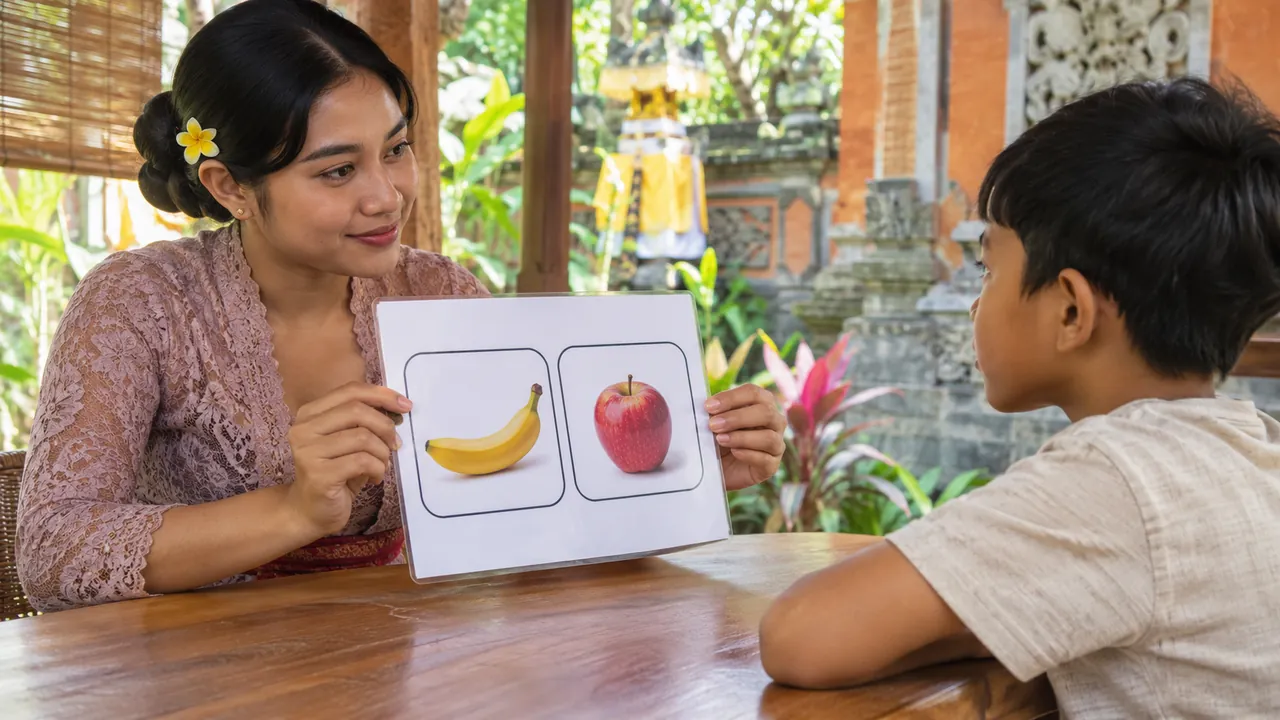
This image is generated for editorial illustration. The people and materials are fictional and do not represent a school or client.
Point to each option and name it neutrally. Ask the question once, then allow enough processing time. Watch for the learner’s established response: pointing, looking, reaching, moving the body, handing over a symbol or selecting on a device.
Respond to the communication immediately where possible. If the learner selects the blue pencil, offer the blue pencil. If the answer is academically incorrect, acknowledge the selection before giving teaching feedback. Do not pretend the learner meant a different option.
Check that the board is not cueing the answer
Adults can unintentionally lean, stare, repeat one word or place the correct symbol closer. Keep established AAC symbol positions and any agreed motor or visual access layout unchanged. For a separate teaching task, vary the examples rather than rearranging the child’s communication system, and follow the agreed selection protocol. Record the response mode and level of prompting.
A board with only the correct answer and one absurd distractor does not reveal much. Use plausible options matched to the lesson, and follow an answer with an action, example or explanation at a communication level available to the learner.
Coordinate choices across home, school and tutoring
Use the same symbols, labels and response conventions where the learner’s team has agreed them. A short note can record which board was used, what question was asked, how the learner selected and whether adult prompting changed.
Families can discuss educational use of established communication supports through the non-speaking learner support page. Families in Denpasar can review practical arrangements on the Denpasar tutoring page.
Frequently asked questions
Can a choice board replace a child’s AAC device?
No. Keep the child’s established communication system available. A small board may support one activity, while AAC assessment and system decisions belong with qualified professionals and the learner’s team.
What if the child does not choose either option?
Respect that response. Check whether the options are understood, available and genuinely acceptable, then offer “different”, “none” or another established communication route rather than forcing a selection.
Related
Message us on WhatsApp: +62 858 6969 6869 · info@privatetutoringbali.com · We reply within one working day.