Academic writing skills
How to write a conclusion that answers the question
Return to the exact task, state the overall answer, combine the strongest reasons and finish with the implication the evidence supports.
Published

Re-read the question before drafting the ending
A conclusion should answer the task the essay was set, not simply announce that the essay is finished. Underline the topic, the instruction word and any limits such as period, text, place or factor. Use those same boundaries to judge what the final paragraph must resolve.
Write a one-sentence provisional answer before looking back at the introduction. This prevents the conclusion from copying an early plan that the body paragraphs may have refined or complicated.
The opening photograph is an AI-generated editorial illustration with fictional Indonesian people. It does not show a real tutor, learner, marked essay or school relationship.
Build the paragraph from answer, synthesis and implication
Begin with the overall judgement in language that matches the question. Then combine the most important reasons into a relationship: which factor mattered most, how the ideas worked together, or what changed across the evidence.
Finish with the consequence of that judgement. The final sentence may explain what the combined evidence shows about the topic, but it should remain inside the scope of the essay rather than making a dramatic new claim.
| Conclusion job | Useful question | Avoid |
|---|---|---|
| Answer | What is my final response to the task? | Repeating the title as a statement |
| Synthesis | How do my strongest points fit together? | Listing every body paragraph in order |
| Implication | What follows from this answer? | Introducing evidence that was never analysed |
Synthesis is more than a list
A list says, “First I discussed X, then Y, then Z.” Synthesis explains the relationship between those ideas. For example, the conclusion might state that one factor created the conditions for change while another determined its timing.
For a practice question asking whether a school should replace every printed textbook with a digital copy, suppose the body has compared search tools, screen access and offline reading. A conclusion might favour digital copies as an addition because quick searching helps some tasks, while retaining print for reliable offline access. For example: “The school should add digital textbooks while keeping print available. Search tools help pupils locate information, but offline access still matters when a device or connection is unavailable. Offering both therefore serves more of the needs examined in the essay.” This is a practice conclusion based only on the stated body points.
Use comparison words carefully: although, because, together, more significant and only when. Each connector should express a relationship already established in the body, not manufacture a stronger argument at the end.
Plan the final paragraph with three cards
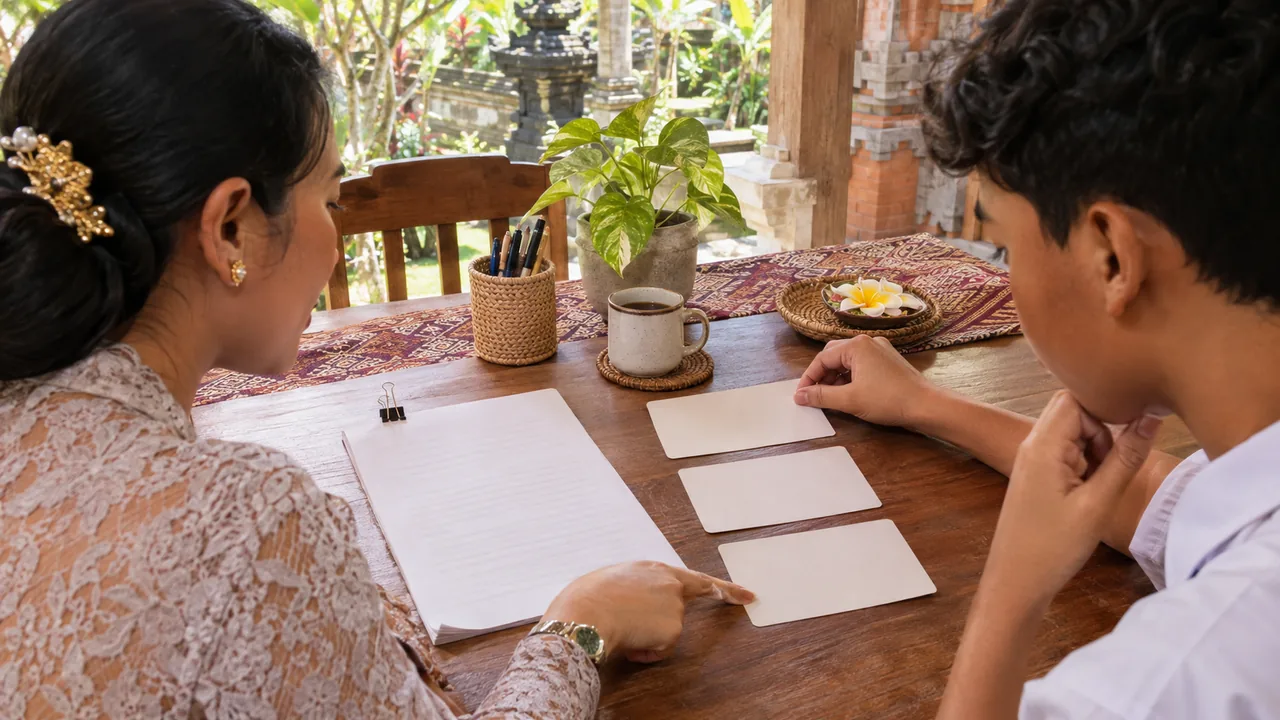
This second photograph is an AI-generated editorial illustration with fictional people and an unreadable practice draft. It records no real assessment or tutoring session.
Place one note under each job: overall answer, relationship between the strongest points and final implication. Draft from the notes without copying whole sentences from the introduction. Then compare the paragraph with the original question word by word.
A balanced judgement can still be decisive. Phrases such as “to a greater extent” or “the evidence is strongest when” are useful only when the essay has actually compared the alternatives.
Remove the common weak endings
Delete “In conclusion” when it is the only signal of purpose; the paragraph’s reasoning should already make its role clear. Replace vague claims such as “there are many reasons” with the specific relationship the essay established.
Do not add a fresh quotation, statistic or example unless the body has already analysed it. Also avoid apologising for missing information or promising what the essay would discuss with more time. Revise the argument that exists on the page.
Get feedback on the reasoning, not a replacement paragraph
A learner who can write body paragraphs but loses the argument at the end can bring the assignment brief and their own draft to a writing tutoring discussion. Feedback should preserve the learner’s ideas and authorship while making the logic more visible.
Families near Umalas can review practical arrangements on the Umalas tutoring page. If the difficulty begins earlier, use the guide on planning a clear paragraph before revising the ending.
Frequently asked questions
Should a conclusion repeat the introduction?
It should return to the same question, but the wording should reflect what the body established. Restate the final answer with the developed relationships rather than copying the opening.
Can a conclusion include a new idea?
It can state an implication that follows from the analysed evidence. It should not introduce a new quotation, fact or line of argument that the body never examined.
Related
Message us on WhatsApp: +62 858 6969 6869 · info@privatetutoringbali.com · We reply within one working day.