Accessible written work
How to reduce handwriting fatigue during homework
Set up a stable writing position, decide which part truly needs handwriting and alternate short writing blocks with planned recovery.
Published

Identify what becomes tiring
Watch one ordinary homework task before changing equipment. Note when discomfort or loss of control begins, whether copying is harder than composing, and whether the child is also trying to remember a long instruction. The problem may be the volume, posture, grip, visual layout or several demands combined.
Pain should not be treated as a motivation problem. Persistent pain, marked weakness or a sudden change needs advice from the child’s school and an appropriately qualified health professional.
The opening photograph is an AI-generated editorial illustration with fictional Indonesian people. It does not show a real learner, tutor, diagnosis or occupational-therapy session.
Stabilise the writing position
Use a chair and table that let the child sit comfortably with the paper supported and feet stable on the floor or a footrest. Place the page at a comfortable angle and keep frequently used materials within reach.
Try a pen or pencil the child can hold without excessive force. A wider barrel helps some children, but no single grip or product suits everyone. Comfort and legibility matter more than making the child copy an idealised hand position.
| Observation | First adjustment to test | What to record |
|---|---|---|
| Hand tires after one paragraph | Use shorter writing blocks with a planned break | Amount completed before fatigue changes the writing |
| Copying consumes the whole task | Provide the prompt or key notes in print | Whether the child can show more subject knowledge |
| Long composition becomes illegible | Trial keyboarding for the longer section if permitted | Quality and independence with each method |
Protect the learning goal
Decide whether the task is assessing handwriting, spelling, subject knowledge or extended reasoning. If handwriting is not the target, reducing copying or using a keyboard may let the child demonstrate the intended learning more accurately.
Keep a small amount of purposeful handwriting where it is useful, such as labels, a calculation or a short final sentence. Avoid adding extra handwriting exercises immediately after the child has completed demanding written work.
Use short blocks and a visible finish point
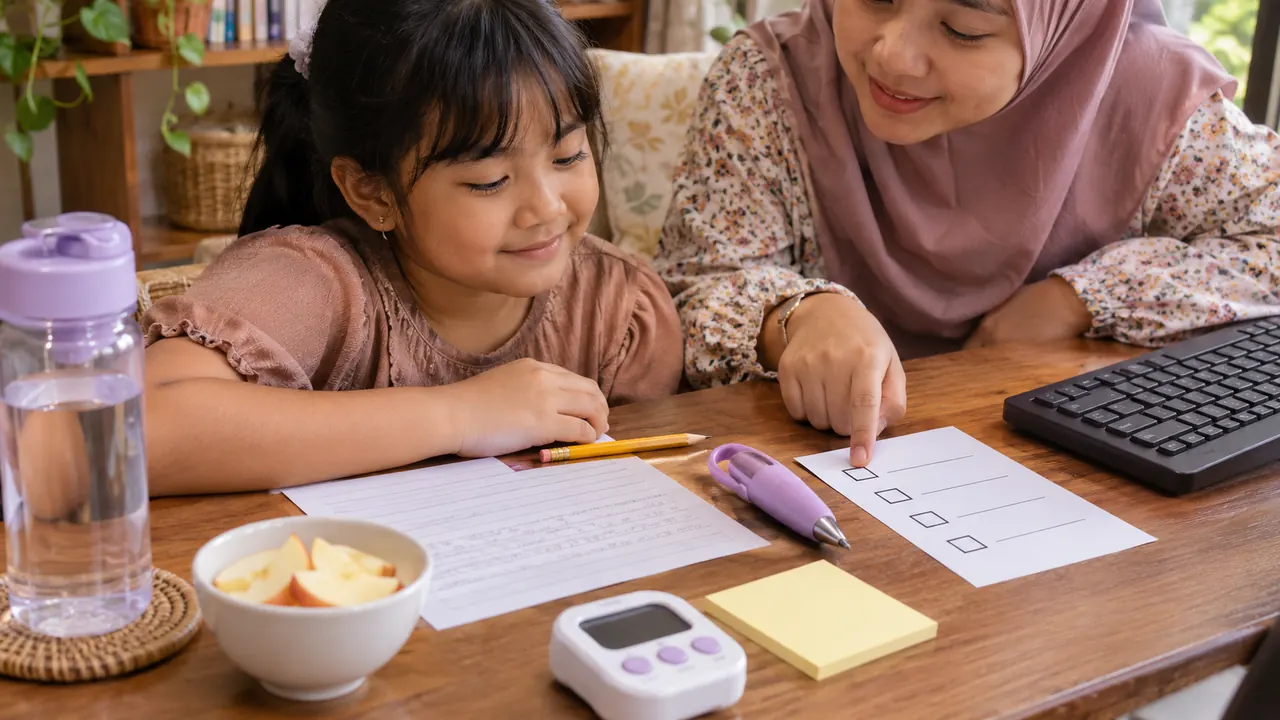
This second image is an AI-generated editorial illustration. It does not depict a real support plan, child or tutoring session.
Mark the small section to complete before the break. A finish point such as three lines or one question is clearer than “work until you are tired”. During the break, change position and rest the writing hand rather than replacing writing with another fine-motor task.
Return for another short block only if the child can do so comfortably. Record the total useful work completed, not just the time spent at the desk.
Agree adjustments with the school
NHS occupational-therapy guidance lists options such as fill-in worksheets, printed notes, rest breaks, keyboard use and a scribe, depending on the child and task. Formal test and exam arrangements are decided by the school and exam board, not by a tutor.
Use the same permitted methods during homework so they become familiar. Share brief evidence about fatigue and output with the school instead of presenting a preferred adjustment as automatically appropriate.
Discuss academic support around motor difficulty
Tutoring can adapt curriculum work around motor difficulty without claiming to remediate the underlying motor skill. Families can describe the child’s current school adjustments through the motor-development support page.
Families near Canggu can review coverage on the Canggu tutoring page. The guide on reducing copying load without lowering the learning goal provides a separate task-design approach.
Frequently asked questions
Should a child stop handwriting completely?
That depends on the learning goal and the child’s professional and school advice. A balanced plan may keep short purposeful handwriting while using alternatives for longer work.
Can a tutor approve exam access arrangements?
No. A tutor can practise methods that the school permits and share educational observations. The school and exam board decide formal access arrangements.
Related
Message us on WhatsApp: +62 858 6969 6869 · info@privatetutoringbali.com · We reply within one working day.