Motor planning and organisation
How to plan a multi-step practical task for a learner with dyspraxia
Reduce the planning load without removing the learning. Show the finished goal, arrange materials in use order and teach one dependable sequence.

Identify the learning goal and the movement demands separately
A practical task can ask a learner to understand a concept while also finding equipment, remembering a sequence, measuring, cutting, recording and clearing away. Write the academic goal first. Then list the physical and organisational actions needed to show that learning.
This separation helps adults preserve the important challenge. If the goal is to compare absorbency, pre-cutting identical paper squares may remove an unrelated cutting barrier. If accurate measuring is the goal, the learner needs supported practice with the measuring action rather than having an adult complete it.
The opening image is an AI-generated editorial scene with fictional materials and hands. It does not show a real learner, therapist, tutor, school or assessment.
Show the end point before giving the sequence
Use a safe finished example, a photograph or a simple diagram so the learner can see what the task is building towards. Point out the features that matter to the learning and avoid decorative detail that may distract from the goal.
Ask the learner to describe or indicate the end point in their preferred way. This checks shared understanding before motor planning begins. It is more useful than asking “Do you understand?” after a long instruction.
Build one visible, teachable sequence
Break the task into meaningful steps and keep the order stable during early practice. A first–next–finish strip may be enough for a short activity; a longer practical can use numbered picture cards. Put the check beside the step where it belongs instead of saving every correction for the end.
| Stage | Visible support | What the learner controls |
|---|---|---|
| Prepare | Materials grouped in use order | Check that the tray is complete |
| Begin | One modelled first action | Start with the named tool or material |
| Continue | One card per meaningful step | Move the completed card and find the next |
| Check | A photo or two success features | Compare the work and decide what to adjust |
| Finish | A consistent return place | Clear and account for the materials |
Prepare the workspace before speed becomes a problem
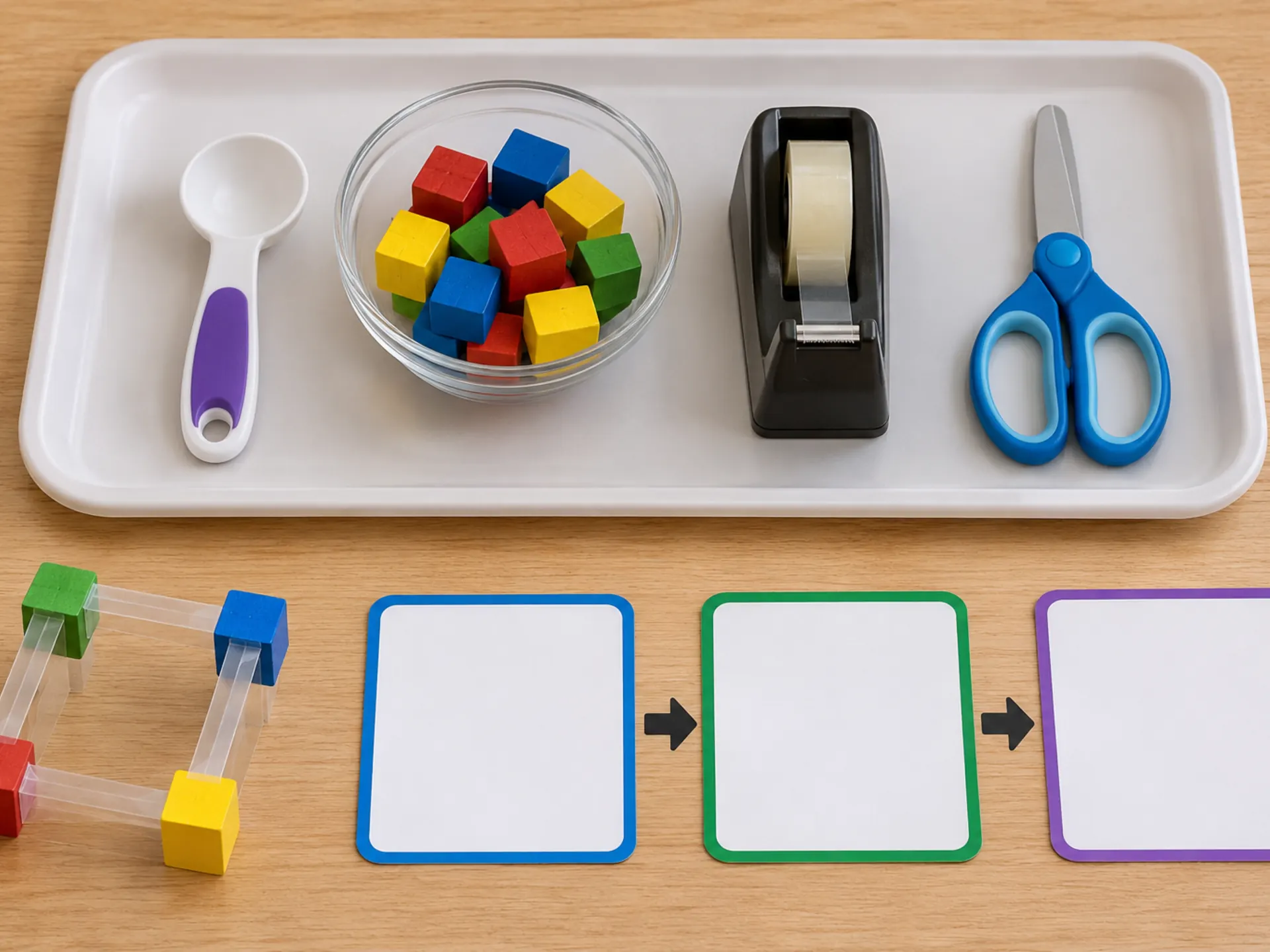
This generated resource scene is illustrative. Equipment should always match the learner, task and school safety rules.
Use a tray or defined work area so equipment has a boundary. Place tools on the side that suits the learner, stabilise containers if needed and remove duplicate materials that invite extra searching. Check that the table and chair allow a comfortable working position.
Introduce any unfamiliar tool separately from the full task. Learning a new grip, sequence and concept at the same time can make it difficult to see which part needs more teaching.
Use pauses for planning, not repeated verbal correction
- Give one short instruction, then allow processing and movement time.
- Point back to the visual sequence before repeating the whole explanation.
- Use a planned pause before a risky, irreversible or conceptually important step.
- Ask what comes next before physically guiding the learner.
- Record which supports helped so future tasks can become more independent.
Individual needs differ. Families and schools should use guidance from relevant qualified professionals where a learner has assessed motor, access or safety needs. A tutoring plan should stay within education and coordinate with existing recommendations.
Practise the routine on real schoolwork
Bring the task instructions and any school adjustments to a dyspraxia support tutoring discussion. A tutor can help make the sequence visible, teach the academic content and observe which steps the learner can begin to manage independently.
Families arranging sessions near Canggu can review the Canggu tutoring page. For related access choices, read how to reduce copying load without lowering the learning goal.
Frequently asked questions
Should every practical task be simplified?
Adjust demands that are not essential to the intended learning. Keep the academic or practical skill that the task is meant to assess, and teach that skill in manageable steps.
When should an adult physically guide a learner?
Follow the learner’s established support and safety plan. Start with the least intrusive useful prompt, allow time to respond and avoid physical guidance unless it is agreed, appropriate and necessary.
Related
Message us on WhatsApp: +62 858 6969 6869 · info@privatetutoringbali.com · We reply within one working day.