Curriculum transition skills
How to map subject gaps when changing curricula
Compare the learner’s current evidence with the receiving curriculum’s sequence, then identify prerequisites, overlaps and a small number of transition priorities.
Published

Compare objectives, not just year-group labels
Two programmes can use the same year number while teaching topics in a different order or expecting different depth. Start with the receiving school’s current subject framework, syllabus or scheme of work. Then collect the learner’s recent reports, marked work and topic lists.
Write the objectives side by side in plain language. Mark what has already been taught, what appears later in the previous programme and what depends on an unfamiliar prerequisite. The result is a transition map, not a judgment that one curriculum is better.
The opening curriculum photograph is AI-generated with fictional Indonesian people. It does not show a real tutor, learner, school or client plan.
Separate overlap, sequence gaps and terminology
Some apparent gaps are vocabulary differences. A learner may know the concept under another name. Other gaps are caused by sequence: the receiving class uses a skill that the previous programme schedules for a later stage.
A true prerequisite gap prevents access to current work. That deserves attention before a topic that is simply unfamiliar but can be learned within the new class.
| Map category | What it means | Best first check |
|---|---|---|
| Secure overlap | The learner can already use the objective | Confirm with one recent independent example |
| Terminology difference | The concept is known under different language or notation | Ask the learner to explain or demonstrate it |
| Sequence gap | The topic was scheduled differently | Check which current tasks depend on it |
| Prerequisite gap | Missing knowledge blocks present learning | Use a small diagnostic before planning support |
Use a small diagnostic, not a full extra exam
Choose a few tasks that reveal the required prerequisite, current objective and next level. Let the learner attempt them without coaching first. Record the method and explanation, not only the final answer.
One mistake does not prove a curriculum gap. Check whether the issue comes from unfamiliar instructions, notation, language, recall or the underlying concept. Use more evidence only where the first task leaves uncertainty.
Prioritise access to current classroom learning
Rank gaps by how often they appear in current lessons, how strongly other topics depend on them and how quickly they can be repaired. A short prerequisite bridge may unlock several units. An isolated topic from the new curriculum can wait until it becomes relevant.
Keep the plan narrow. The learner still needs time for current classwork, rest and adjustment to a new school. Avoid recreating an entire previous year from the new programme.
Review the map with new evidence
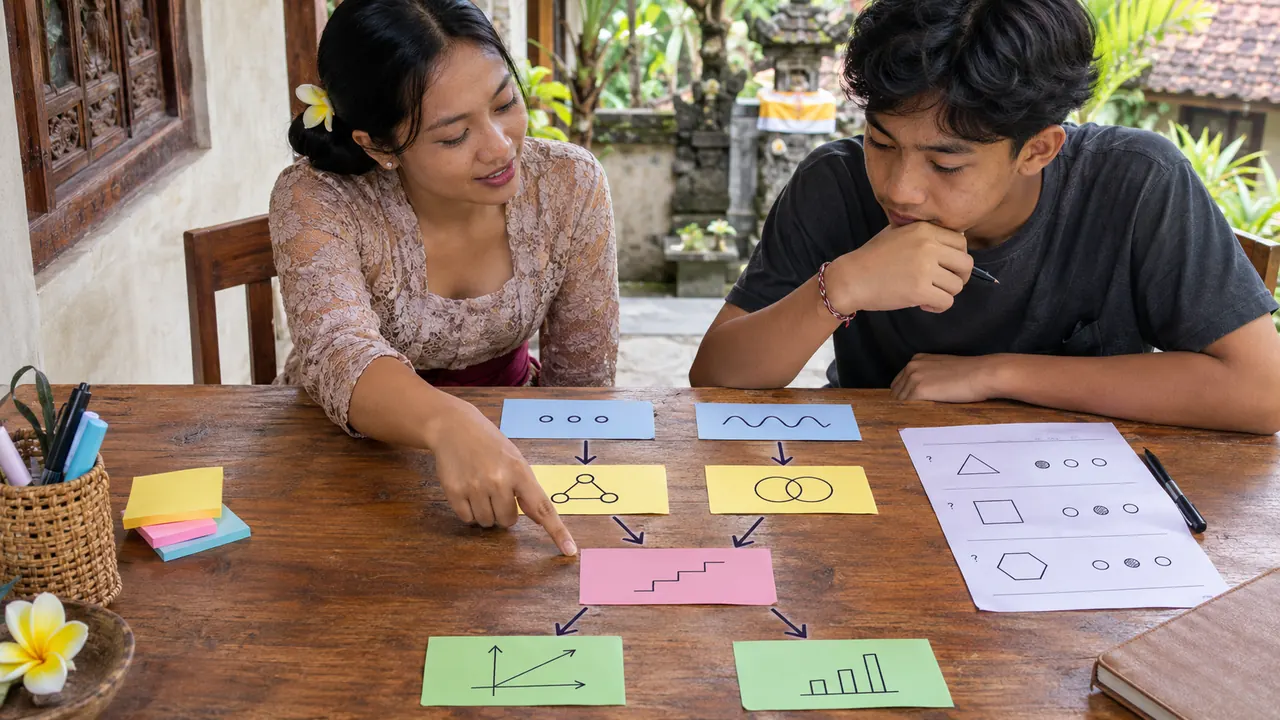
This curriculum-mapping image is AI-generated with fictional people and does not document an actual school transition.
Update the map after the first weeks of lessons, teacher feedback or a school assessment. Move an objective to secure only when the learner can use it independently in the expected format.
Keep the receiving school’s guidance as the authority. Curriculum frameworks describe progression, but the school decides the exact teaching sequence, resources and assessment calendar.
Get help with a curriculum transition
If several subjects use different sequences or terminology, bring the receiving school’s programme and recent learner evidence to an international curriculum discussion. The commercial curriculum page owns service enquiries; this article provides a mapping process.
Families in Nusa Dua can also review the Nusa Dua tutoring area page. The curriculum comparison guide helps families compare wider programme features before a transfer.
Frequently asked questions
Is every unfamiliar topic a curriculum gap?
No. It may be a terminology difference, a topic scheduled in another order or a genuinely missing prerequisite. Use the current framework and a small diagnostic to distinguish them.
Should a child complete the whole new curriculum before starting school?
Usually no. Prioritise prerequisites that unlock current classroom learning and update the plan after the receiving school provides evidence and feedback.
Related
Message us on WhatsApp: +62 858 6969 6869 · info@privatetutoringbali.com · We reply within one working day.