Practical learning guide
When your child knows letter sounds but cannot blend
Knowing individual sounds and joining them into a word are different steps. Start with familiar sounds, model the whole process and keep practice aligned with school.

Listen to what happens between the sounds
A child may point to each letter, say its sound correctly and still be unable to read the word. That does not make their earlier learning meaningless. Recognising a sound and holding several sounds together to hear a word are different demands. Watch the process before choosing more practice.
Notice whether the child leaves long pauses between sounds, forgets the first sound by the time they reach the last, adds an extra vowel to each consonant, or switches to letter names. Also check whether all the spellings in the word have actually been taught. A task can look simple to an adult while containing an unfamiliar sound-spelling relationship.
Our phonics overview explains the broader terminology and teaching approach. This guide deals with one specific difficulty: a child recognises familiar letter sounds but has trouble joining them into a word.
Check the school's sound sequence first
Ask the classroom teacher which sounds and spellings the child is currently practising, and request a short demonstration of the blending routine used at school. Use that sequence as the starting point at home. Introducing several new methods and spellings at once can make it harder to see whether blending itself is improving.
A word with three letters is not necessarily easier than every longer word. What matters is whether the child knows the sound each spelling represents and can work through the sequence. Choose practice words from the taught set rather than selecting words only because they look short.
Listen to a reliable pronunciation model if you are unsure. Oxford Owl provides parent videos showing how phonics sounds and blending can be modelled. Try to avoid adding an extra 'uh' after a consonant, because that can make the sequence harder to combine. Follow the teacher's guidance for the particular programme.
Model one word all the way through
Use a familiar word such as sun only if the child has learned its sound-spelling correspondences. Point to the first spelling, say the sound, move across the word and blend into the complete spoken word. Then say the word naturally. Let the child see that the purpose of working through the sounds is to recognise a meaningful word.
Invite the child to try with you before expecting an independent attempt. If they get stuck, model the process again calmly rather than repeating 'sound it out' more loudly. That instruction tells them what to do but may not show them how to coordinate the steps they are finding difficult.
Once the word is read, briefly check meaning: ask where the sun is in a picture or use the word in a simple spoken sentence. Do not use the picture to guess the written word. Decoding and discussing meaning have different roles, and both deserve attention.
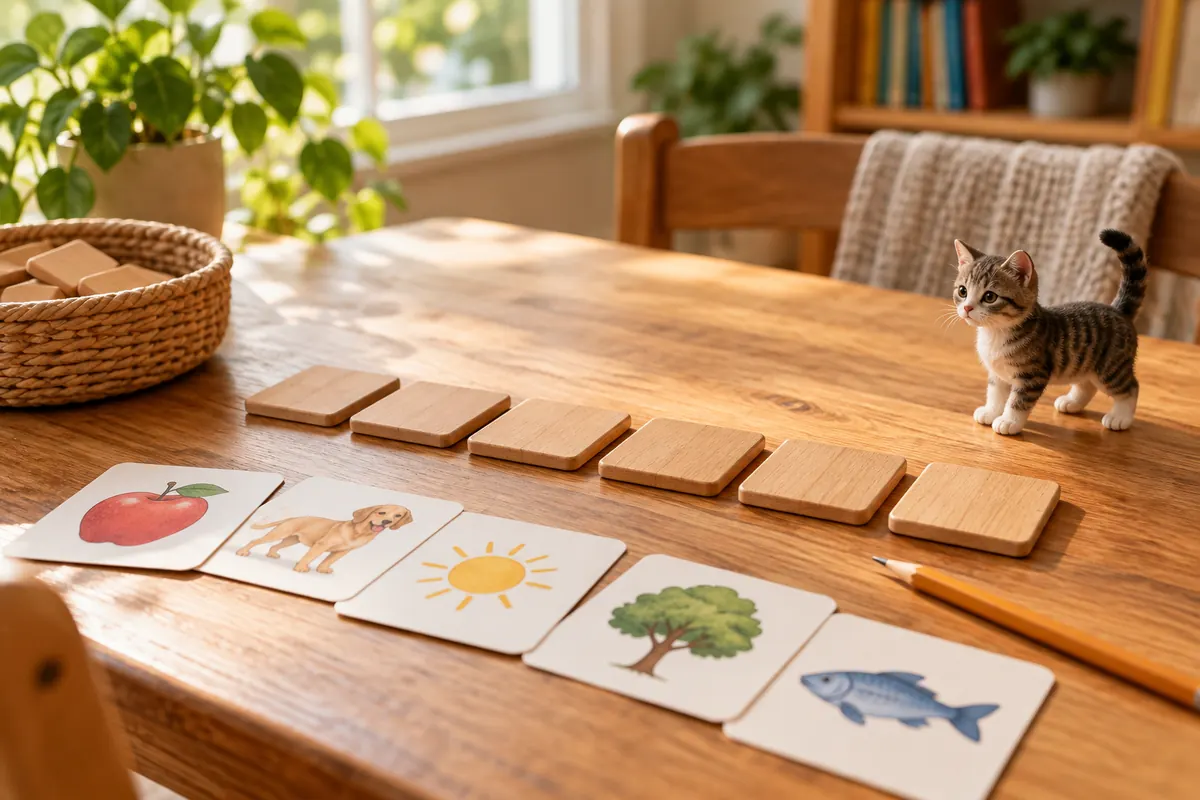
Generated picture cards and tiles illustrate a reading activity. Choose the actual spellings and materials from the school programme.
Use oral blending as a short listening activity
Without printed letters, say a short familiar word as a sequence of speech sounds and invite the child to identify the whole word. This lets you notice whether combining spoken sounds is difficult even before letter recognition is involved. Keep the vocabulary familiar and the activity relaxed.
Do not turn one difficult attempt into a diagnosis. Tiredness, unfamiliar words, the way an adult pronounces sounds and the task itself can all affect what happens. If oral blending remains difficult across familiar examples, describe the pattern to the teacher and ask what they recommend practising next.
When oral blending becomes manageable, connect it back to the written spellings the school is teaching. A child needs to see how the printed word represents the spoken sequence. Oral games can support that connection, but they are not a substitute for appropriate reading instruction.
Choose books that let the child practise the taught code
For independent practice, ask the school for a decodable book matched to the sounds and spellings already taught. A book that looks appealing may still demand spellings the child has not learned. If nearly every word needs adult rescue, the book may not be suitable for that practice purpose.
Keep shared reading alongside decoding practice. An adult can read a richer story aloud, discuss characters and enjoy the language with the child. The book used for an adult read-aloud does not need to be restricted to the child's independent decoding level. These two kinds of reading offer different opportunities.
If your family speaks more than one language, keep enjoying stories and conversation in those languages too. Tell the teacher which language and literacy experiences the child already has. Difficulty with an English blending task alone does not establish a general learning difficulty.
Record the smallest useful sign of progress
Try a few familiar words and note the amount of support needed. Did your child blend with you, blend after a model, or read independently? Could they read a different word containing the same known spellings? A small record of support is more informative than a large worksheet covered in ticks.
Finish while the child can still experience a manageable success. If frustration rises, reduce the demand or stop and return another time. Persistent distress or a continuing difficulty despite appropriate classroom support deserves a conversation with the teacher. Bring concrete observations rather than comparing your child with another child's speed.
For early-years learning support, share the school's phonics programme, the taught sounds and an example of what happens during reading. Families based in Seminyak can use the area page to discuss home-session arrangements. Availability and the appropriate session format need to be confirmed for the individual child.
Frequently asked questions
Should I use letter names or sounds for blending?
Use the sounds represented by the spellings when blending a word, following the school programme. Letter names are useful knowledge too, but reciting them is not the same process as joining speech sounds to read.
Does difficulty blending mean dyslexia?
A blending difficulty alone does not establish a diagnosis. Share repeated observations with the classroom teacher and discuss appropriate support or assessment if concerns persist. Tutoring is educational support, not a clinical assessment.
Related
Message us on WhatsApp: +62 858 6969 6869 · info@privatetutoringbali.com · We reply within one working day.
Sources and further reading
Published by Private Tutoring Bali. Sources and corrections.